
VR corporate training has moved from pilot projects to everyday practice. Companies now use virtual reality to onboard new hires, run compliance refreshers and practise high-stakes situations safely, with one course rolled out to every site and language. This guide covers what a modern VR corporate training programme looks like in 2026, what results to expect, and how to start without a big production budget.
Table of Contents
What is VR corporate training?
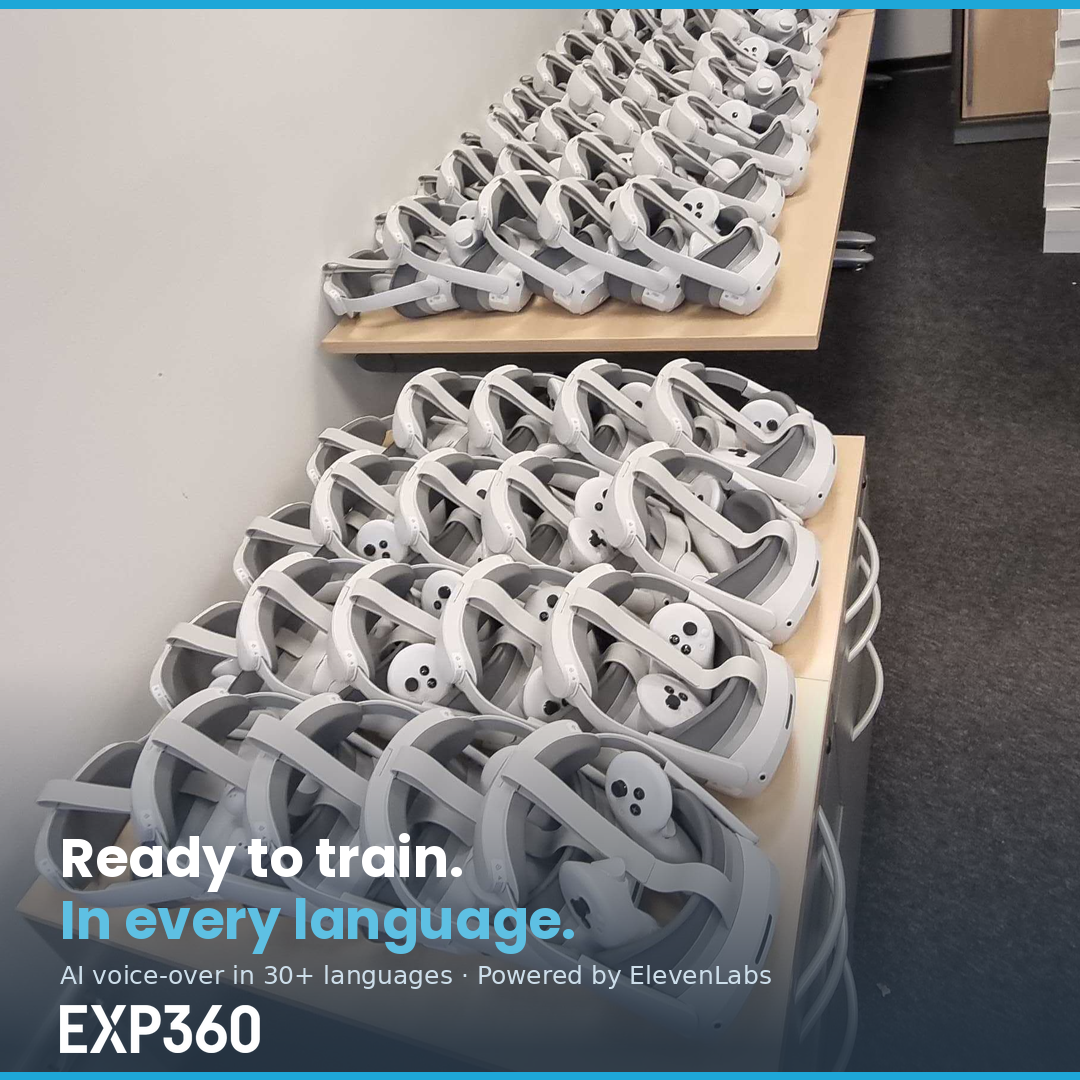
VR corporate training replaces or supplements classroom sessions with immersive scenarios experienced in a VR headset, on the web or on mobile. Instead of watching slides, employees practise the actual task: walking a safety route, handling a difficult customer conversation or operating equipment, in a realistic 360° environment.
The difference to classic e-learning is active participation. Learners look around, make decisions and interact with the environment rather than passively clicking Next. Research consistently shows higher retention and faster completion than traditional formats, and employees describe it as training they actually look forward to.
The corporate use cases that work
Onboarding and induction
New employees tour facilities and meet AI-avatar guides before day one. One virtual induction serves every location identically, so a new starter in Hamburg gets exactly the same quality as one in Singapore.
Compliance and safety
Hazard-spotting, evacuation routes and equipment procedures are practised, not just read. Completion and interaction are tracked automatically, giving you audit-ready evidence without paperwork.
Soft skills and customer scenarios
Realistic role-play with virtual customers or colleagues, repeatable until confident, with no awkward classroom role-play in front of peers.
Case study: engaging 15,000 employees every month
One large service organisation trains around 15,000 team members per month. With their previous slide-based e-learning, the numbers told a familiar story: engagement was low, courses were left half-finished, and completion rates kept slipping, a real problem when training underpins compliance.
After switching to interactive 360° content, the pattern reversed. The training became something people explored rather than endured: interaction with the content increased sharply, and learners actually spent less time completing the full course, because active participation moves people through material faster than passive reading. Most importantly, course completion rates climbed.
The wider lesson: when training is immersive, staff engagement with continuous professional development goes up. CPD stops being a box-ticking exercise and becomes part of how people work, which compounds over every monthly training cycle.
The VR classroom: how delivery works
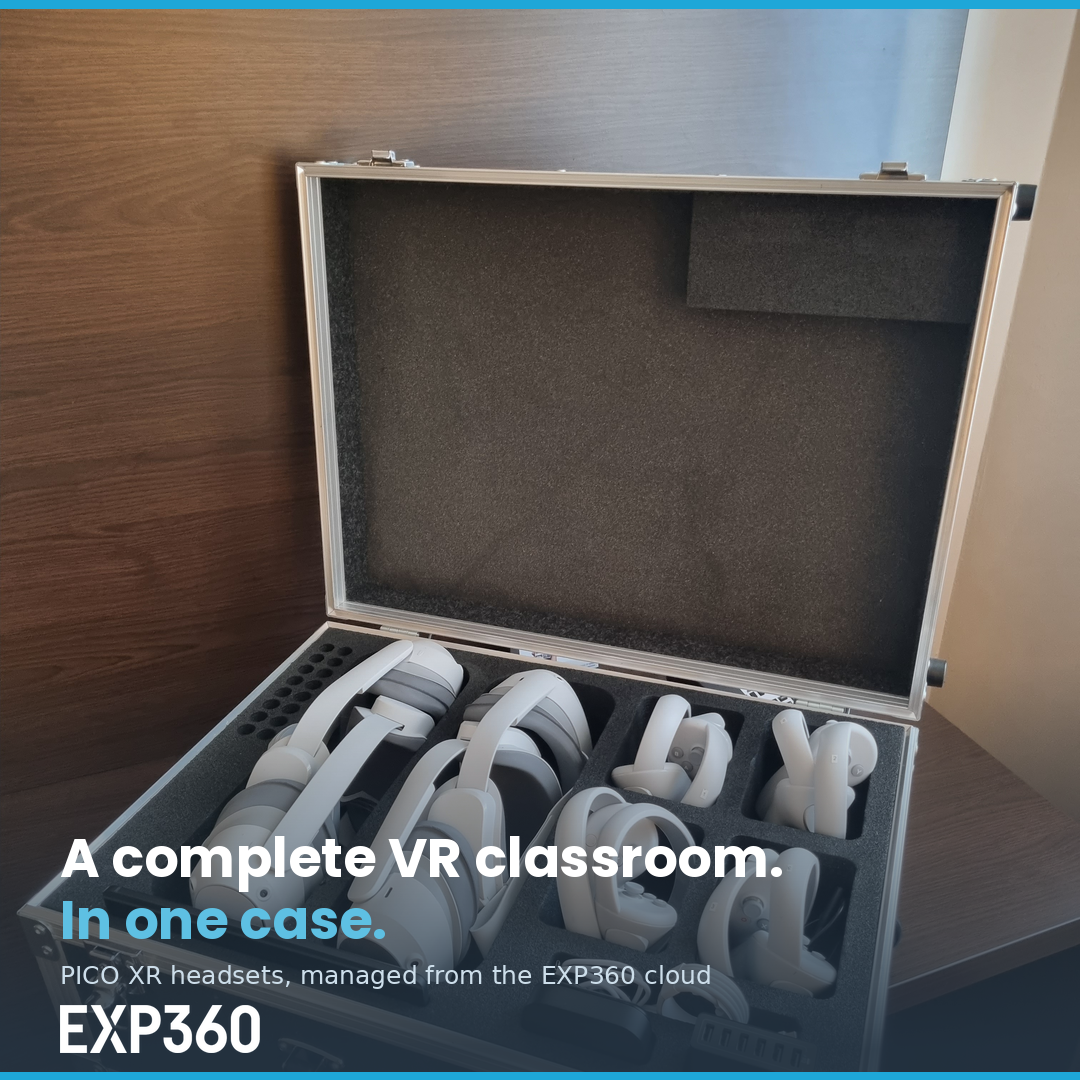
A modern virtual training programme runs from a cloud CMS. Content is produced once, then published to web browsers, phones and VR headsets (such as PICO or Meta devices) simultaneously. Ready-made headset kits in a flight case turn any meeting room into a VR classroom in minutes, and one cloud update reaches every device at once.
Because the same course runs in a browser, nobody is excluded: headset sessions deliver full immersion where it matters, while remote or deskless staff join from whatever device they have.
AI has removed the two biggest costs
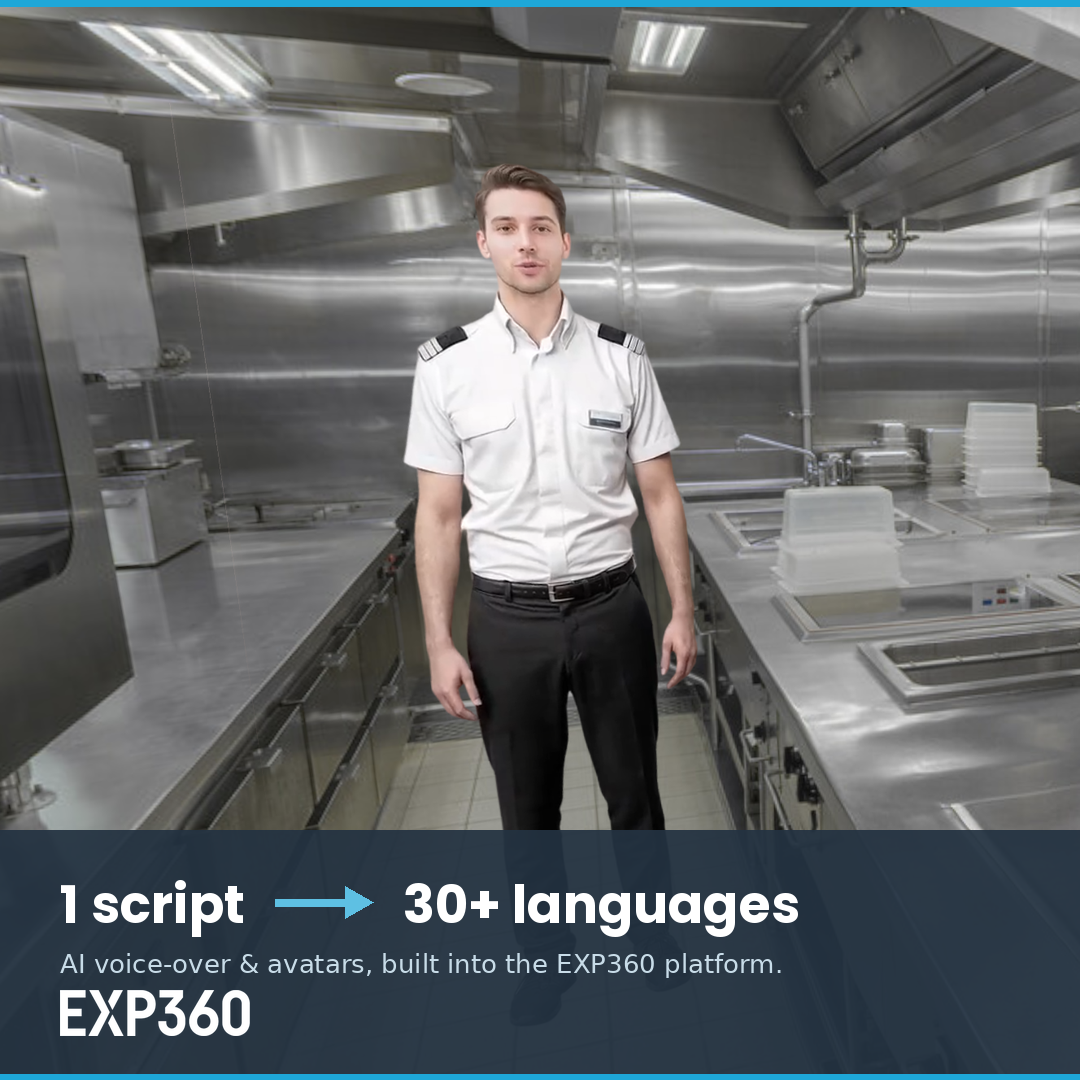
Production and localisation used to be the blockers. Today, AI avatars and AI voice-over generate a virtual presenter and turn a single script into natural narration in 30+ languages, created inside the platform with simple prompting. Corporate training that once needed film crews and re-recording per language is now produced in days, and updated just as quickly when a procedure changes.
See it live: an AI avatar with multi-language voice
The demo below is a real EXP360 training experience: an AI-generated avatar presents inside a 360° environment, with voice-over produced by AI. Click through it in your browser, the same experience runs on mobile and VR headsets.
Getting started
Start with one high-value course, for example safety induction, measure completion and knowledge transfer, then scale. For a deeper walkthrough of planning, costs and ROI, see our complete enterprise VR training guide, or book a demo to see a live VR corporate training course with AI avatars and multi-language voice.
FAQ
Do employees all need headsets?
No. The same course runs in a web browser and on mobile; headsets add immersion where it matters most.
How long does it take to build a course?
With 360° capture and AI-generated presenters and voice-over, a first course typically takes days rather than months.
How is success measured?
Built-in analytics track completion, interactions and time spent, per user and per site, so you can see engagement rise the way the organisation in our case study did.