
Enterprise VR training has moved from pilot projects to core L&D infrastructure. In 2026, organisations use virtual reality to train staff on high-risk procedures, complex equipment and customer interactions, safely, repeatably and at scale. This guide explains what enterprise VR training is, where it delivers the most value, what it costs, and how to roll it out without a false start.
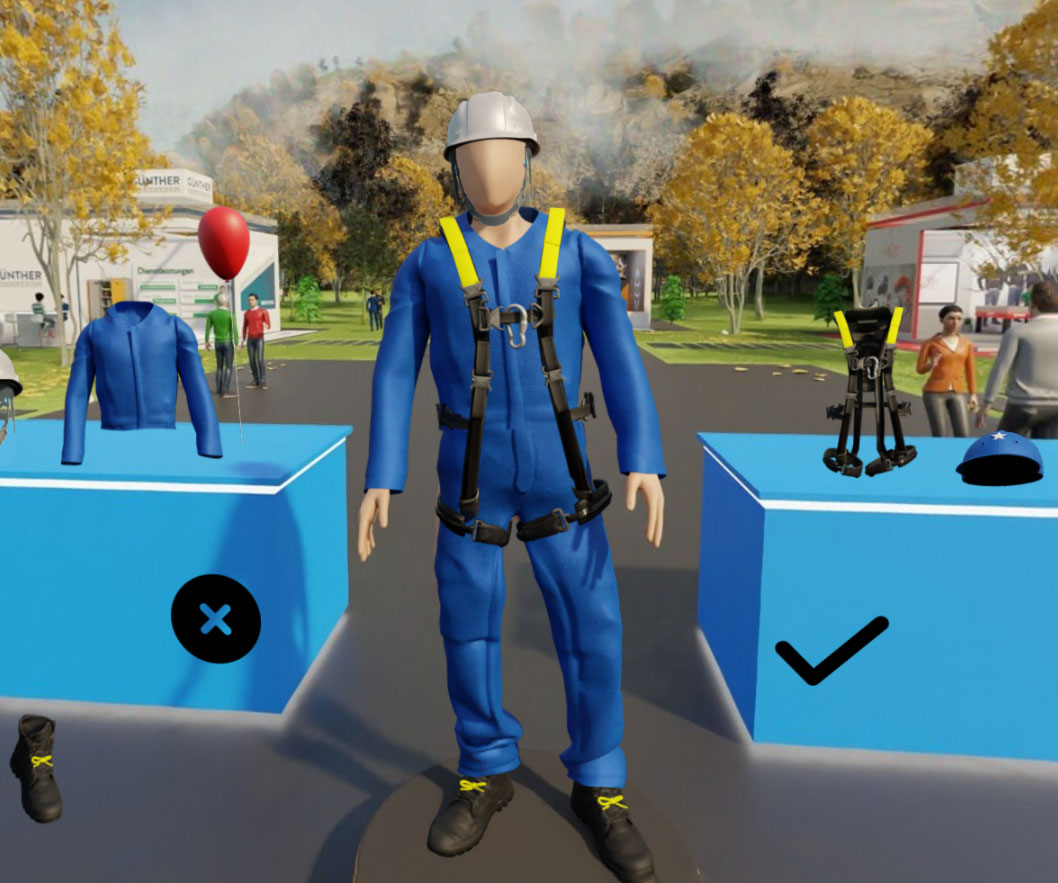
Table of Contents
What is enterprise VR training?
Enterprise VR training places employees inside a realistic, interactive 3D or 360° environment where they can practise tasks and decisions hands-on. Instead of watching a video or reading a manual, learners actually do the work in a risk-free simulation, whether that is operating machinery, responding to a safety incident, or handling a difficult conversation. Modern platforms are hardware-agnostic, so the same experience runs on a standalone headset, a tablet or a desktop browser.
Why it works: retention and ROI
The case for enterprise VR training rests on how people learn. Immersive learning consistently delivers far higher knowledge retention than passive formats, because learners are active participants rather than spectators. VR also compresses time-to-competence and lets staff repeat dangerous or costly scenarios as often as needed at near-zero marginal cost. The economics improve with scale: a module has an upfront build cost, but once built it reaches hundreds or thousands of employees across locations without travel, instructors or physical equipment.
Top enterprise VR training use cases
Safety training
High-risk industries rehearse emergencies and hazardous procedures without real-world danger. See how this works in manufacturing & construction, where VR safety training cuts incidents and onboarding time.
Technical and equipment training
Staff learn to operate and maintain complex machinery in simulation before touching the real thing, reducing errors and downtime.
Onboarding and operations
New hires get familiar with facilities, workflows and duty stations before day one. In the cruise industry, crews use VR to learn ships and roles ahead of joining.
Soft skills and customer interaction
Sales, service and leadership teams practise conversations and scenarios in a safe space, with consistent delivery across the whole organisation.
What enterprise VR training costs
Cost depends on three things: content production (filming 360° scenes or building 3D environments), the platform to host and deliver it, and hardware (if any). The key to controlling cost is reuse, a single 360° capture can power a tour, a training module, an event and a wayfinding experience. Choosing open formats also means you keep ownership of your assets and avoid lock-in.
How to roll out VR training, step by step
- Pick one high-value use case. Start where the pain is clearest, usually safety or a costly onboarding bottleneck.
- Produce or capture the content. Use 360° media or 3D renders of your real environments for authenticity.
- Build the experience. Add interactions, hotspots, quizzes and guided logic, no coding required on a modern platform.
- Deliver across channels. Push to headsets, web, mobile and your LMS so every learner can access it on the device they already have.
- Measure and iterate. Track completion and performance in analytics, then refine the weak points.
Common pitfalls to avoid
The most common reason VR pilots stall is not the technology, it is content trapped in a single app. If your training only runs on one headset model or one platform, it cannot scale. Choose a VR content management system that is multi-channel and offline-capable, so experiences reach the field even without a connection.
How EXP360 supports enterprise VR training
EXP360 is a CMS-powered XR platform built for exactly this: create immersive 360°, VR and XR experiences once, then deploy them across headsets, web, mobile, LMS and print, online or offline, on any device. Explore our virtual reality business training capabilities to see how it fits your use case.
Ready to see enterprise VR training in action? Book a free demo and we will walk through your specific scenario.
Related reading
- The Best VR Training Platforms in 2026
- VR Safety Training in Construction
- How 360° Virtual Hotel Tours Increase Direct Bookings
Frequently asked questions
What is enterprise VR training?
It is workplace training delivered inside an interactive 3D or 360° simulation, where employees practise real tasks and decisions hands-on instead of watching videos or reading manuals.
Does VR training actually improve retention?
Yes. Immersive, active practice is retained far better than passive formats like slideshows, and it lets staff repeat high-risk or costly scenarios safely until the correct response is automatic.
How much does enterprise VR training cost?
Cost comes from content production, the platform, and any hardware. It scales well: a module has an upfront build cost but can then reach hundreds or thousands of employees with no travel, instructors or equipment per learner.
Do employees need VR headsets?
Not necessarily. A hardware-agnostic platform delivers the same experience on standalone headsets, tablets and desktop browsers, so training is never blocked by equipment.
Which use case should we start with?
Begin with one high-value scenario, usually safety training or a costly onboarding bottleneck, prove the impact, then expand across the organisation.
Related reading: how VR corporate training works in practice, and a guide to VR medical training companies for healthcare teams.